6 fabulous flower walks at Essex Country Parks
Spot fabulous foxgloves, rhododendrons, early ox-eye daisies and orchids at Essex Country Parks this May and June.
Posted on 21st April 2026
During May and June fabulous flowers are starting to bloom across our green spaces.
The flora across the parks varies. Some of the plants hark back to the landscaping of the lost great houses that helped to shape some of our parks as they are today.
Wildflower meadows are benefitting from new habitat restoration and natural land management techniques we’re employing at the parks to boost biodiversity for the future.
All of the flowers are important for a wide variety of insects and pollinators including early butterflies, bees and hoverflies.
We’ve pulled together some of the best spaces to enjoy the season’s best displays at the Essex Country Parks. Make time to enjoy these glorious bursts of purple, white and yellow and take a read of our butterfly blog and spotter's guide.
Boost your wellbeing by spending time in nature.
NB: If you are walking with your dog remember to keep them on a lead and under control and around wildlife.
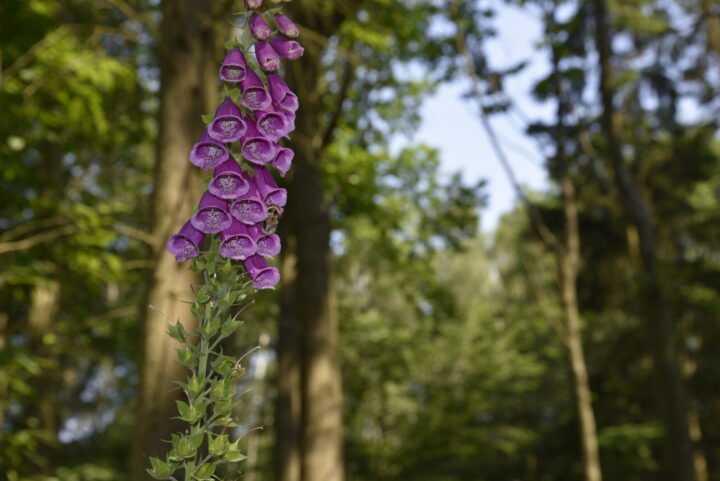
1) Woodland foxgloves at Weald Country Park
At Weald Country Park we’ve noticed foxgloves benefitting from our woodland works over the last few years to open areas up and let more light in.
For the best spots, start at Lincoln’s Lane car park and head across the ridge to The Forest. Take a left at the crossroads further into the woodlands and weave your way around the plantations – sticking to the paths and rides so as not to disturb any wildlife.
Enjoy these stunning columns of purple bursting from the woodland floor as the bluebells start to wan in the dappled sunlight. Stop and listen to the bird song and spend some time in nature to feel good.
For particularly good displays head to Beech Wood and up to Chestnut and Larch Woods and back.
Read more about our landscape restoration works at Weald, what we’re doing and why.
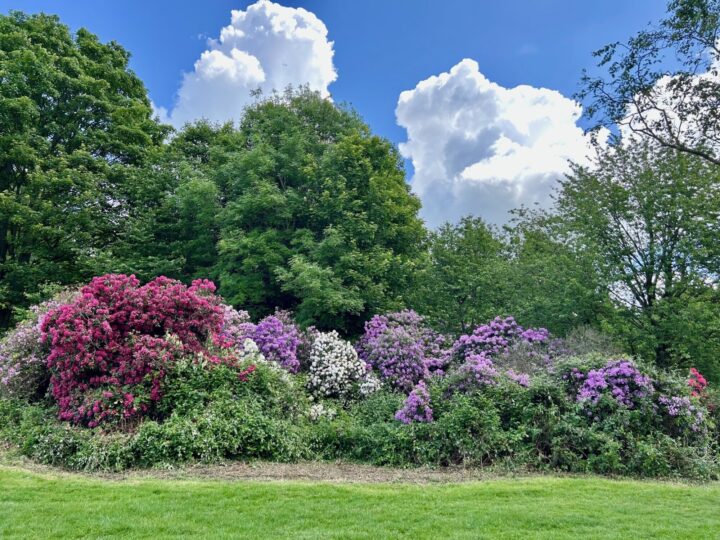
2) Historic rhododendrons and azaleas at Weald Country Park
Also at Weald Country Park, start at Belvedere car park to explore the historic planting at Belvedere Mound – a nod to the old Weald Hall.
Walk up the mound towards the folly, enjoy waning bluebells and daffodils along the way.
Take a moment to enjoy the folly and read the boards telling you more about the history.
Find the avenue down the mound with fabulous views over the park – lined with amazing yellow azaleas. Loop back round towards the car park to enjoy the flowering rhododendrons in bursts of pinks and purples.
Spend longer enjoying the site by heading over towards the visitor car park and café for refreshments.
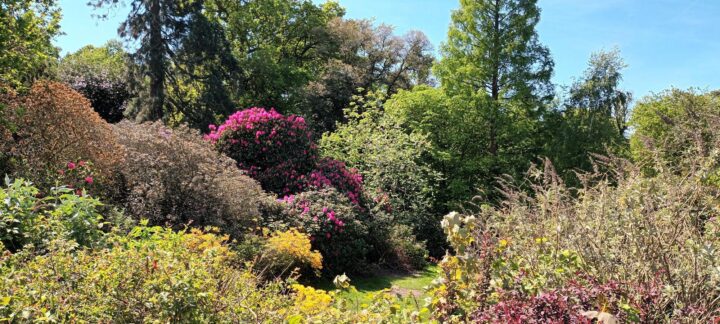
3) Campions and cowslips at Danbury Country Park
Danbury Country Park looks lovely in May with a mix of woodland, meadow and planted flora.
Delight in blossom, bluebells, campions, cowslips, rhododendrons, ox-eye daisies and foxgloves too.
Start at Lake car park and wind around the corner of woodland near the icehouse.
Meander back up past lower lake into the wildflower meadow and continue up towards Danbury Palace and the planted borders. Loop back around the middle, or continue past top lake into the woodlands for a longer ramble. See what you can spot and share your photos with us by tagging our official Facebook page.
Stop and enjoy the moment on one of the many benches. Listen to the birdsong and enjoy the new life around you. Remember to keep any dogs on the lead and under control to protect the precious wildlife here.
View a map to plan your visit.
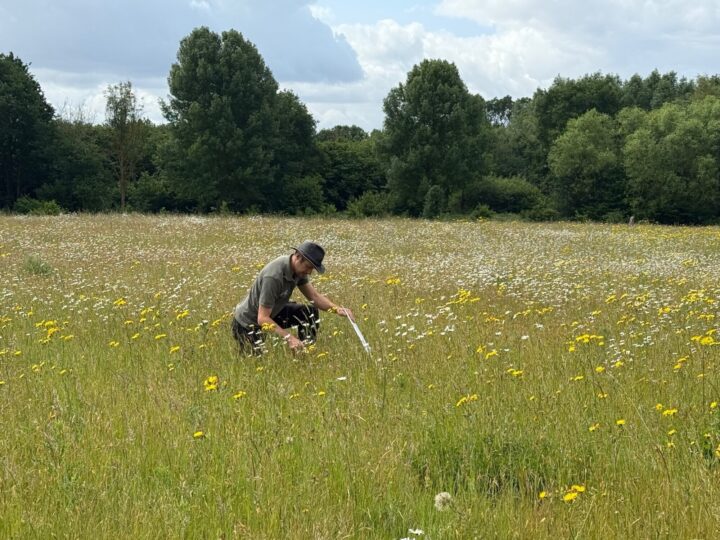
4) Yellow rattle and early meadow buttercups at Belhus Woods
In May and June the meadows are starting to come alive at Belhus Woods Country Park.
Discover cowslips, red campion, early meadow buttercup, early purple orchids, oxeye daisy and yellow rattle – a key indicator of a healthy grassland.
Start your walk at the car park and pick up a sustaining beverage at the café at the beginning of your wildflower walk.
Take a path through Running Water Wood and head further into the park across Running Water Brook and turn into Chimney Fields.
Head through Bumpstead Meadow, then take the path round the main lake.
Go on through Whitehall Wood and finally through Brock Meadow and back round the car park.
Look out for butterflies en route.
Early butterflies including brimstone, orange tip, peacock, have already been recorded at the park. In May you should see commas, small tortoiseshell, and the occasional holly blue and speckled wood.
Plan your visit and view a map of Belhus Woods.
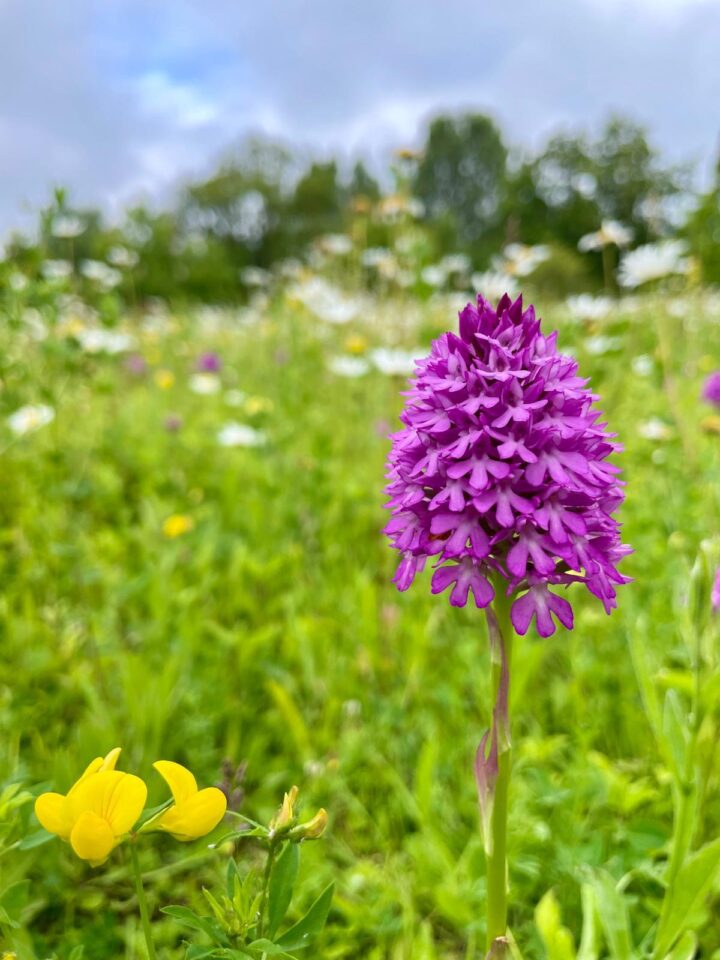
5) Ox-eye daises and orchids at Great Notley Country Park
At Great Notley Country Park ox-eye daises and other meadow flowers are starting to come into their own in May and June.
Head from the car park towards the lake.
Discover a glorious blanket of daises, yellow meadow buttercups, pink grass vetchling and purple pyramidal orchids that will likely come to a peak (depending on the weather!) in June – on both sides of the path.
Stroll around the lake in dappled sunlight and take a moment to reflect and enjoy the water birds. You might even spot a rare bee orchid on the far side before heading back through the picnic meadow to enjoy more wildflowers.
These wildflower meadows were created when the Great Notley Garden Village housing estate was built. Soil was brought over from the new housing development to create the mounds and the farmers' fields were turned into wildflower meadows. Some of the seeds were originally sown and they have self-seeded since then. The team at the park also actively manage the land to encourage the wildflowers to grow.
Plan your visit and download the park map.
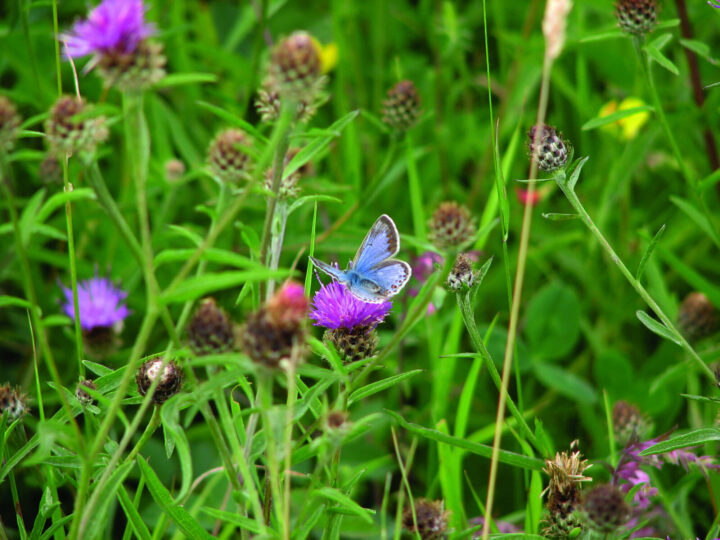
6) Rare grassland flowers at Hadleigh Country Park
Did you know that the south facing 'Thames Terraced Grasslands' at Hadleigh Country Park were once well established, but as scrub has grown up, a proportion of these areas have become lost?
At Hadleigh the team have been undertaking a funded programme to restore and manage these grassland areas, to protect and increase the numbers of rare native flowers that already grow there.
In turn these plants should support the rare bee species and other insects found at Hadleigh and boost biodiversity – supporting a nationwide effort to protect and enhance the natural environment for the future.
These works have already seen a successful increase in rare plants including:
- Bithynian vetch
- Deptford pink (mostly from July)
- Hairy vetchling
- Hartwort
Take the main route down the hill from the Visitor Centre enjoying the views along the way and keeping an eye out for other visitors on the multi-use trails. Head right when you meet the path and bridleway at the bottom towards Benfleet Downs and loop back round. Enjoy the grasslands along the way and see what you can spot.
Read more about our Landscape Restoration projects to boost flora and insects for the future.
Tagged with
Related blogs

Explore 5 New Heritage Trails at Cressing Temple Barns
Travel back through time with the new interactive heritage trails at Cressing Temple Barns.
Posted on 10th September 2026
Read article
5 Best Essex Heritage Walks
Step back in time with our selection of heritage walks in Essex.
Posted on 24th August 2026
Read article
Discover 5 fascinating Essex mills
We are celebrating our five Essex based mills and their history and heritage. Read on to find out more.
Posted on 21st August 2026
Read article