Visit the fabulous foxgloves making a comeback at Weald Country Park
We’re delighted that these stunning flowers are blooming at Weald, a sign that our recent woodland works have been working.
Posted on 4th June 2026
Foxgloves are making us smile.
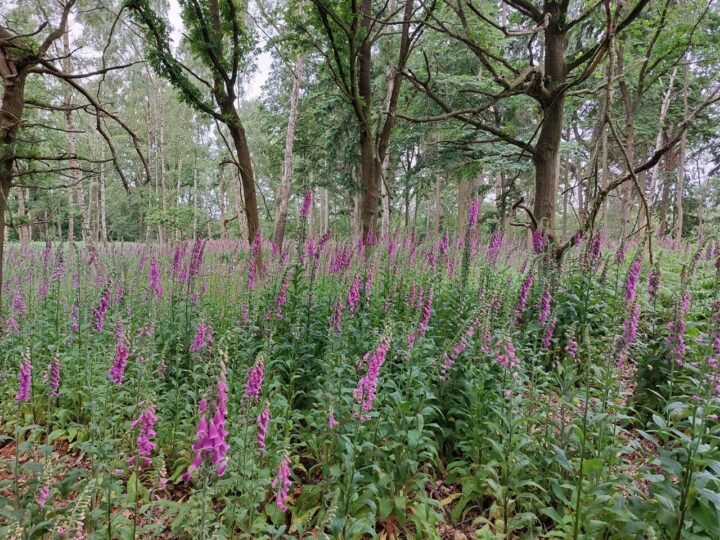
At Weald Country Park, we’re happy to see foxgloves in our woodland. The foxglove is a real show-off wildflower. One of Britain’s best-loved woodland plants, they flower every other year with striking tall purple and pink thimble-shaped blossoms. We have lots here, so you’ll see plenty of blooms in late spring.
A sign of woodland restoration working well.
We’re especially delighted to see foxgloves at Weald Country Park.
We have been working hard to restore Weald’s woodland for several years, and the foxgloves are a sign it’s working.
Starting in autumn 2024, dozens of fast-growing trees such as sycamore were removed so those remaining could grow to their full potential. Not all trees belong in a British woodland. Some species grow fast and spread quickly, blocking light from native trees, wildflowers and insects that depend on open space. Removing them gives the woodland room to breathe.
Cutting down trees has reduced the tree canopy cover (the layer of branches and leaves above your head), meaning sunlight can shine through onto areas that were previously heavily shaded. More sunlight on the woodland floor encourages the growth of plants and flowers, which in turn benefits insects, birds and mammals.
It takes time . . .
Autumn 2024: selection of fast growing plantation trees cut down.
Winter 2024/25: area looks bare, more light reaches the soil for the first time in years.
Spring 2025: bluebell seeds, dormant (sleeping) for years begin to germinate and spread.
Spring 2026: foxgloves bloom, insects and birds return.
To begin with, the woodland looks empty and bare and quite rightly visitors asked our rangers why healthy trees were being removed. It doesn’t take long for nature to take its course. 18 months on and we start to see real changes.
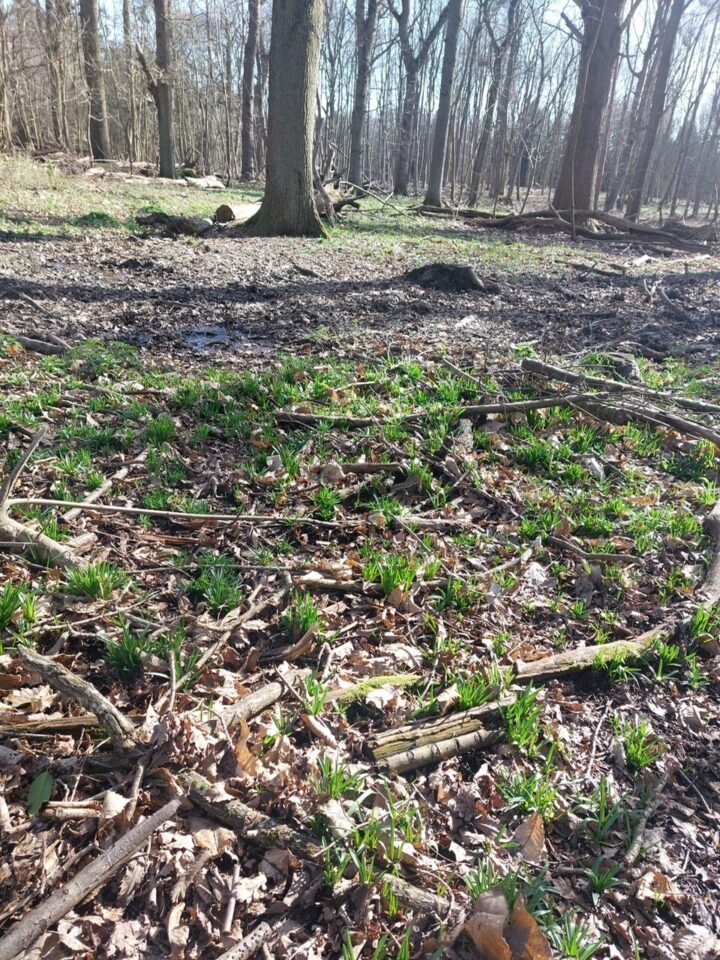
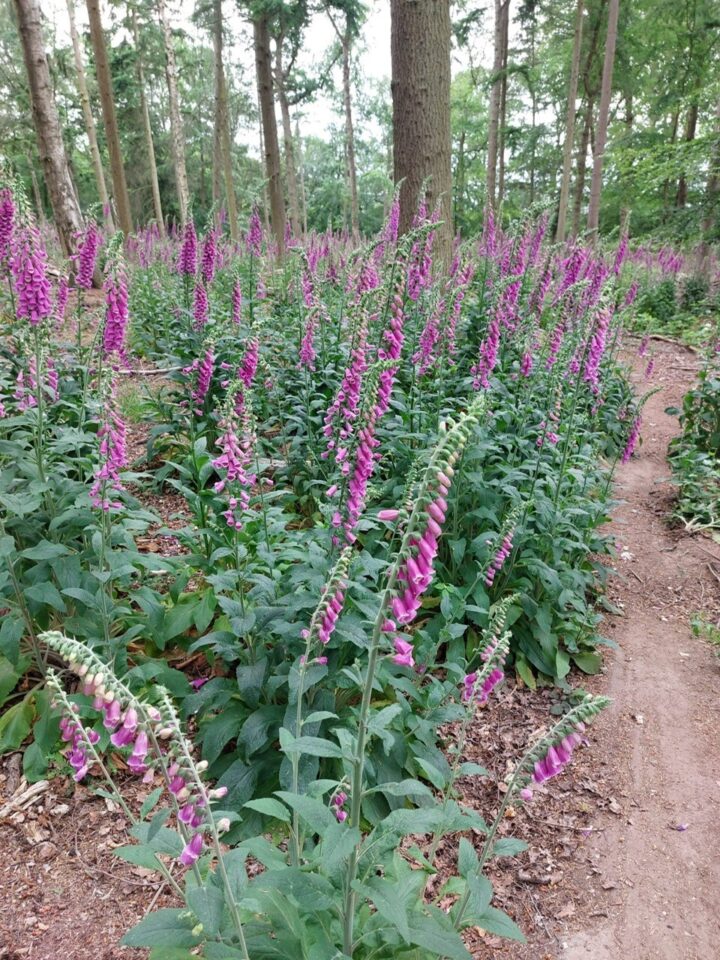
Wildflowers are thriving thanks to the increased space and light – we saw a carpet of bluebells in late April and now the foxgloves are making their appearance.
What happens to the trees you remove?
Sometimes nothing! Trunks and branches are often left in piles close to where they were cut down. Dead and rotting wood creates important habitats for insects – beetles love these spaces. Timber is then moved away from the country parks and is often used in the building industry as fence posts.
What you can see today
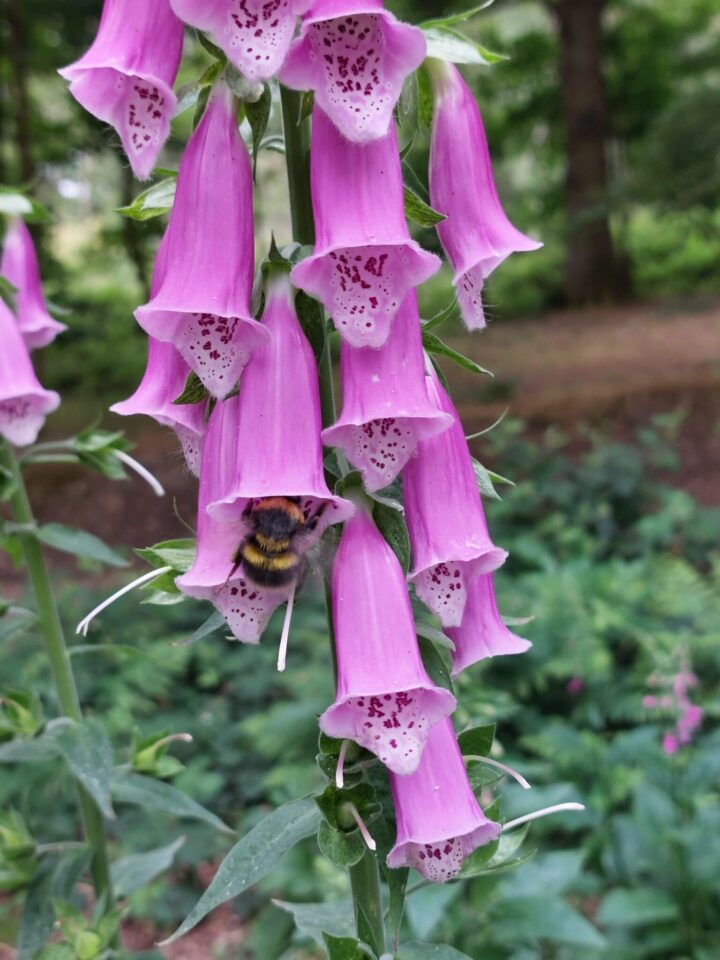
Next time you visit, look up at the trees and down at the ground. Not only do the foxgloves make a stunning view, but these wildflowers also help support pollinators to flourish. It’s a pleasure to see native and rare species returning. Look out for bees, butterflies, ladybirds and birds who are all attracted to our restored woodland.
Our country parks are important natural spaces valued by Essex residents as well as a variety of wildlife.
Tagged with
Related blogs

Hadleigh Country Park pump tracks to be upgraded for riders of all ages
Work to upgrade two pump tracks at Hadleigh Country Park is to take place this autumn following £225,000 of investment by Essex County Council.
Posted on 12th October 2026
Read article
Discover 8 fascinating facts about our country parks and places for Essex Day
We’re celebrating some of the significant points of interest at our Essex Country Parks and places this Essex Day.
Posted on 5th October 2026
Read article
Explore a Series of Essex Heritage Talks this Autumn
As a county Essex has a rich history and it keeps revealing its past, so why not come and see what’s surfaced this autumn.
Posted on 25th September 2026
Read article