Amazing amphibians and reptiles at Essex Country Parks
Amphibians and reptiles are important for our grassland, wetland and woodlands and we are lucky to have many of the native species at our Essex Country Parks.
Posted on 1st July 2026
Whether you think they are cute or creepy, amphibians and reptiles can be found in your local country parks, and whilst you’re not that likely to spot these often shy creatures, did you know they are important to our countryside?
They provide natural pest control by consuming large quantities of insects, beetles and spiders, and even rodents. They also help to show how healthy a habitat is, as their presence and numbers signal the overall quality of the land.
At Essex Country Parks we are lucky to have all three species of native newts (smooth, palmate – only at Thorndon – and great crested) common frogs and toads, slow worms, common lizards, grass snakes and even adders.
Park teams are working with Amphibian and Reptile Conservation (ARC) and Essex Amphibian and Reptile Group (EARG) to survey and monitor populations.
Find out more about the species you might spot and what the parks are doing to support them below.
Great Notley: Encouraging great crested newts
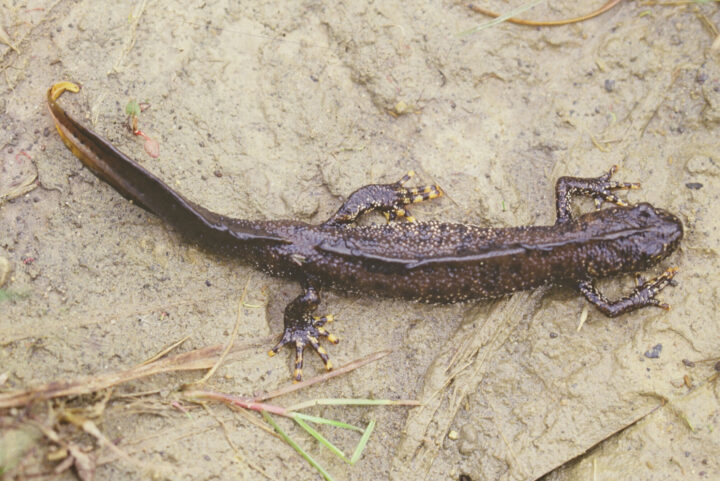
At Great Notley Country Park the team have worked with the Friends of the Flitch Way to encourage great crested newts at Pitch Pond.
The teams have thinned the flora around the banks which had become very overgrown and blocked a lot of light from reaching the water. Now light can reach the pond it will encourage more pond vegetation which is ideal for newts to lay their eggs in.
The team also hope that the shallow south facing bank will become a great area for the newts to bask on a sunny day.
Thorndon: Home to rare Palmate newt
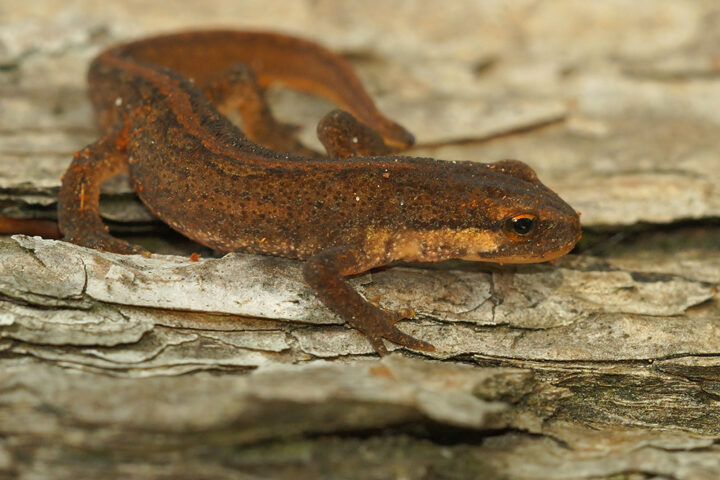
Thorndon Country Park is an important breeding site for great crested newts, smooth newt, palmate newt (not so common in Essex), common frog and the common toad.
The park have been working towards improving habitat for amphibians for many years in collaboration with Essex Amphibian and Reptile Group (EARG).
In recent years they have restored two ponds (with grant funding from EARG and Land of The Fanns) and dug new ones where there were ponds historically.
The team carry out regular management, protecting these ponds from disturbance by building dead hedges around them and clearing debris to keep them in good condition.
Any works done in or around great crested newt habitat always at right time of year, following Precautionary Working Methods or with GCN licence holders in attendance.
Belhus: leaving grass long . . .
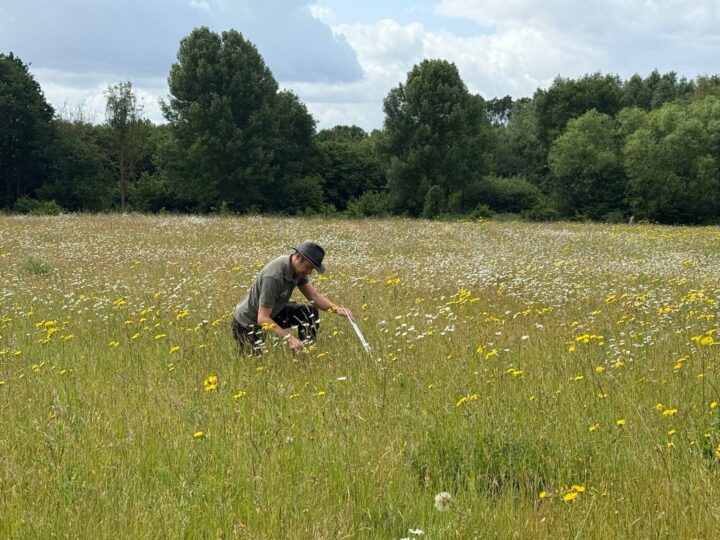
Belhus Woods is home to all native species of amphibians and reptiles, and Rangers help to protect them by using particular management practices.
They leave long grass and areas of scrub to encourage populations to increase. They are also taking steps to improve the diminishing wet habitats at the site for amphibians in the face of increasing temperature trends.
Danbury: new pools . . .
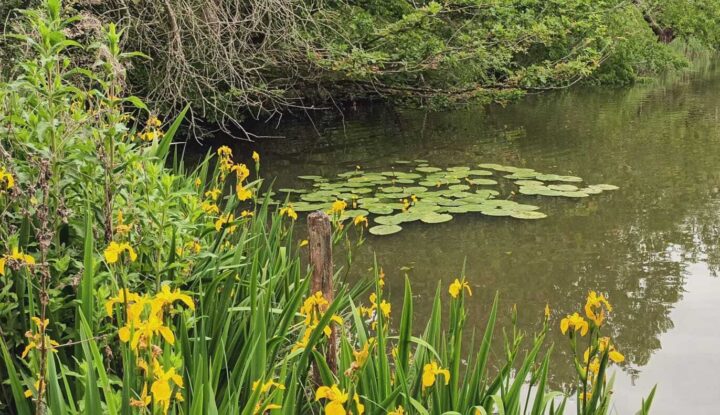
At Danbury a variety of projects have been taking place to support amphibians.
New leaky damns have been successful in slowing the water flow through the park and creating new pools and wet areas.
They have already seen frogs and dragonfly nymphs taking full advantage of these tiny wet habitats. These pools also encourage insects to thrive and this in turn benefits bats and birds.
Cudmore Grove: Snakes and lizards
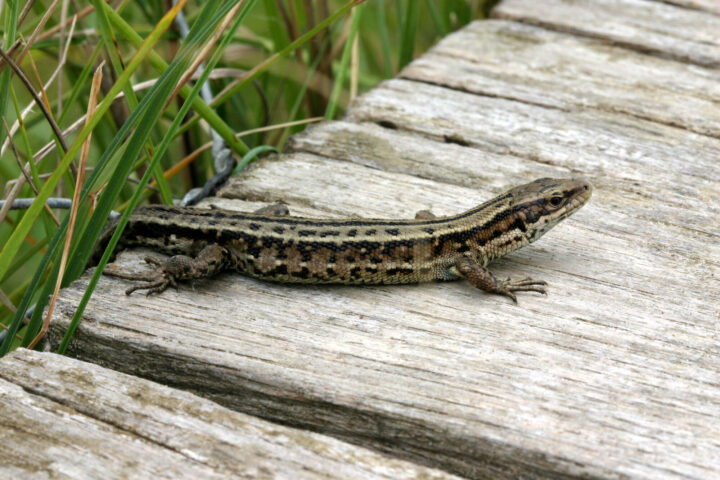
Cudmore Grove is home to adders, common lizards and grass snakes. The park team create habitat piles around the site for them to use for basking and hibernating.
Remember to keep dogs on a lead and stick to paths for the safety of these animals and yours!
Weald: Leaky dams and new damp areas
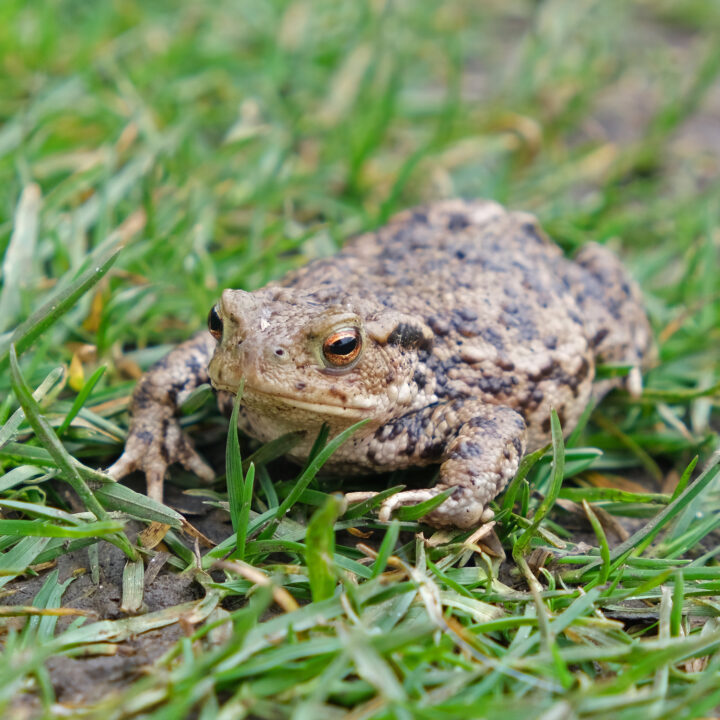
The team at Weald have worked with Essex Floods team to create a series of leaky dams along the stream that feeds the main lake and create other natural ‘damp’ areas on the hill where the rain water collects.
This has increased the habitat for all species of amphibians and the hope is to boost their populations at the park.
How to behave when visiting
Many of the parks use artificial ‘refuge’ sheets to provide shelter for and encourage these animals.
If you ever find one of the corrugated ‘refuge’ sheets on your visit, please don't touch or move them, remember, they have been placed there on purpose!
On your visit remember to respect all wildlife, stay a distance away, and keep dogs under control and stick to paths, tracks and trails so as not to disturb the creatures that live here.
What to avoid: The adder
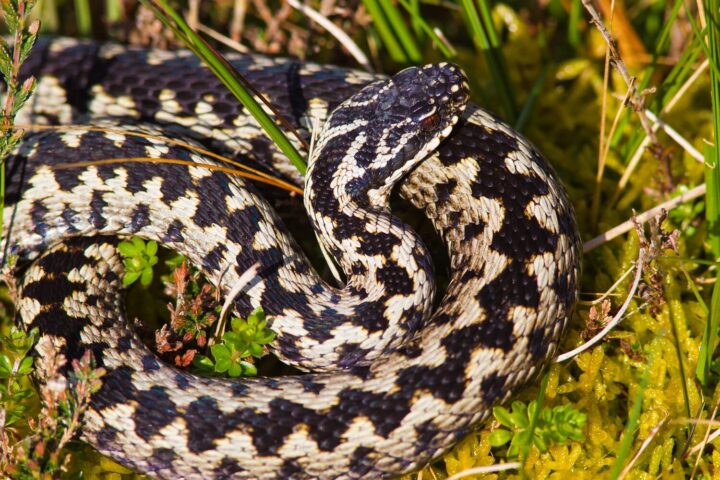
The adder can sometimes be spotted soaking up the sun in woodland and meadow glades from March to October. As the UK’s only venomous snake it’s worth being able to recognise, although bites are extremely rare. It’s distinctive by the dark diamond pattern on its back.
Adders are secretive and well camouflaged and it’s unlikely you’ll see them apart from in early spring when they are warming up after hibernation and competing for mates. Simply stick to the paths and that way you won’t disturb them.
Adders may be found at Cudmore Grove, Hadleigh and Marsh Farm Country Parks.
How to spot different species
You can read more about the fascinating species of amphibians and reptiles found at Essex Country Parks in our Essex Explorer magazine feature.
Tagged with
Related blogs
Get Busy Spotting Butterflies
Read more about the importance of monitoring butterflies and how you can get involved.
Posted on 24th July 2026
Read article
Meet the animals helping to look after our country parks
Find out more about the livestock grazing Essex Country Parks, naturally managing grass and scrub to allow wildflowers and insects thrive.
Posted on 9th June 2026
Read article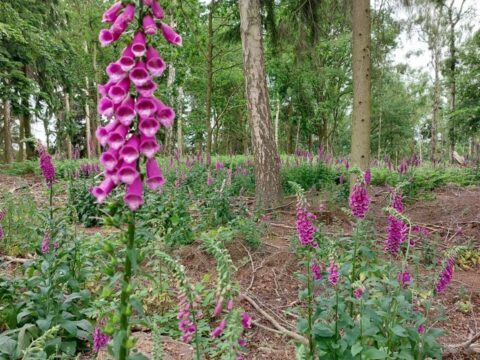
Visit the fabulous foxgloves making a comeback at Weald Country Park
We’re delighted that these stunning flowers are blooming at Weald, a sign that our recent woodland works have been working.
Posted on 4th June 2026
Read article